Tuesday, 23 January 2024

A sad find.

 Despite the bitingly cold weather we have had over the past week, the natural world is looking forward to spring. Our Kestrels wait, side by side now, reestablishing their bond and showing a real interest in west nest box. I was also thrilled to see two Little Owls perched on the straw bales. They haven't been noticeable since last Autumn. They too are acknowledging the longer days and stronger sunshine that tells them spring is not too far away. The Barn Owls show me that they too are thinking of new families. They seem more hostile to the youngsters who still hiss at me from the straw stack as I approach and two adults are flying from the combine shed together. It fills me with excitement to see them like this


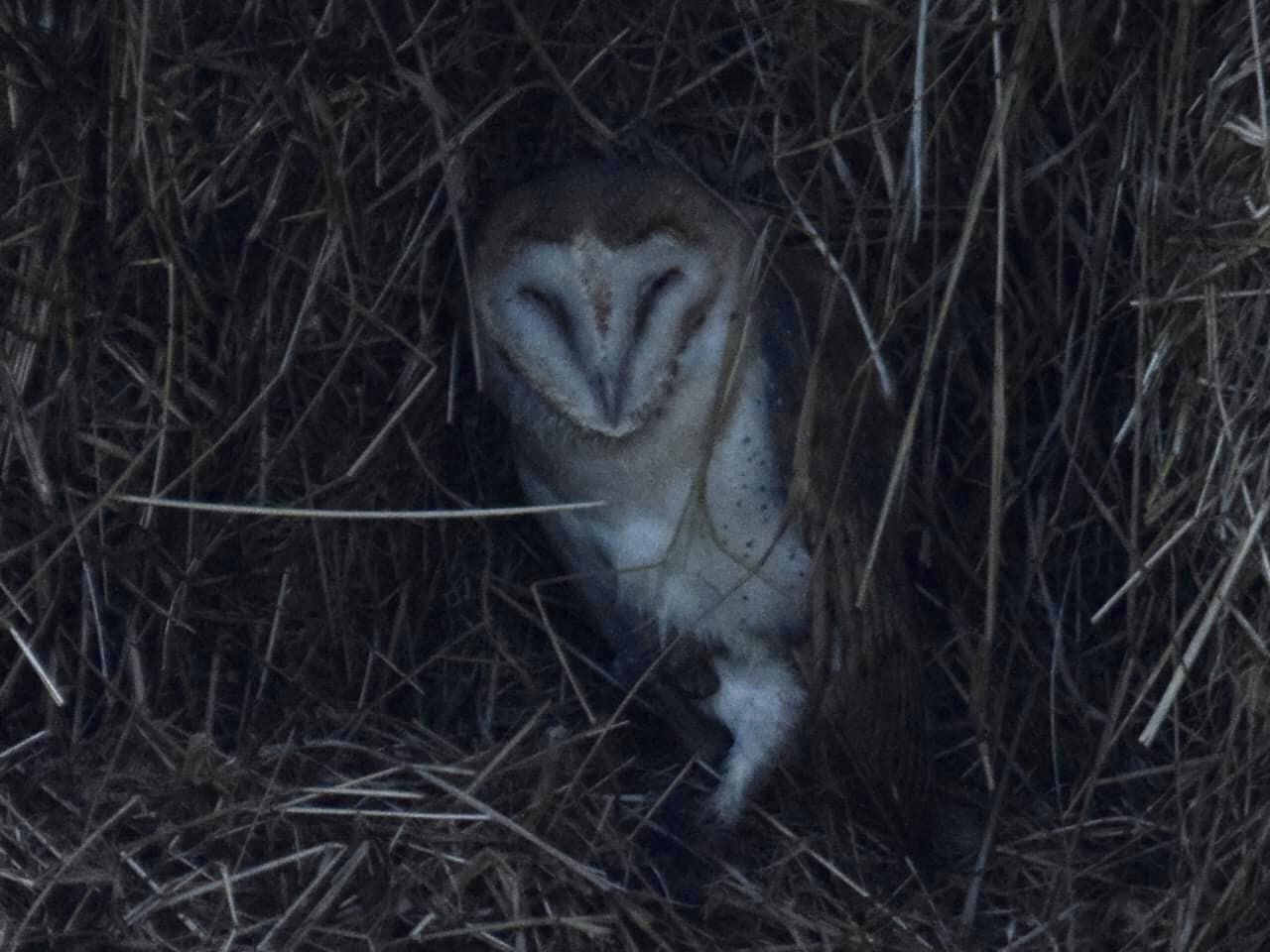
But there is one bird that won't be finding a mate and looking for a nest site this spring. After Storm Isher I walked down in trepidation. The wind had been relentless and the owls were unable to fly out for food. I knew one night alone wouldn't hurt them as they had been well fed during the cold, frosty spell. My biggest worry was that they would be blown out into the worst of the weather and become predated. Yet the youngsters were more experienced now and thankfully, when I arrived to check the following morning, there were no owls in the grass field or around the yard. It seemed that they had stayed in their roosts and kept themselves safe. 

It was as I returned to the yard that I spotted a light shape in the open sheds near the house. I went inside to check. Now, I am always imagining casualties, it simply goes hand in hand with what I do. When you look out for Barn Owls as I do, you imagine the worst for them too. Only recently I convinced myself that a fawn shape hunched on the side of the A47 was an injured owl only to find on the return journey that it was a sugar beet!! So the majority of the time my investigations bring me relief but not so that morning. I knew even from a distance that this was one of my Barn Owls laying dead on the dusty floor.

The poor thing was paper thin, just feather and bone and had undoubtedly starved. Its beautiful obsidian eyes were firmly shut and its wings were majestically spread in what seemed like a gesture of hopelessness. Initially I thought it was a male but its wings and back were deeply barred in grey  reminding me of an especially dark female that I had been watching on the farm since the summer. It had been dead for a while and I suspect had succumbed during the stormy weather in early January when Storm Henk brought us rain that made hunting impossible.

After twelve years I still find this hard. I'd heard of owls starving during the wet weather and even advised some people how to help them but never imagined it would happen on our site. I leave twenty day old chicks out each night, there was plenty to be had. Perhaps it hadn't flown in as rigorously as the others when the parents stopped providing for it. maybe it became injured and stranded in the shed. It possibly may not have even been one of our youngsters. Just a couple of years back we found a starved youngster in these very barns and its ring told us it came from a nearby nest site so maybe this bird was also from away and hadn't realised there was food offered. Since Christmas I had seen an owl peering at me from these sheds on my morning walk. How I wished now that I had kept a closer eye upon it.

I am beyond sad to notice that where two young owls sat closely in the straw waiting for me each evening there is now only one.I loved  the way these fledglings continued with their close bond despite leaving the nest box in October and it makes the death seem even more poignant. However, there is no point in dwelling on what has happened I have to move on. To look out for the owls that greet me each evening and watch for the kestrels on my morning. To do what I do and make a difference where I can.


Monday, 8 January 2024

Worrying

 The storms that have impacted the UK and, in turn our wildlife this winter, have been relentless. We began with Storm Agnes on the 25th September and have had a severe storm approximately every two weeks since then culminating in eight in total including Storm Henk on the 2nd January. Between these storms we have had deluge upon deluge of rain leading to flooded fields and brimming ditches. It's a hard time to be a Barn Owl.

(Our beautiful female )

Although these conditions are tricky for all wildlife, Barn Owls are especially susceptible. Their feathers aren't waterproof. This is necessary for silent flight and makes them a feared hunter as they can stalk their prey and strike without being heard. It does however mean that during rain they cannot hunt. Wet undergrowth proves tricky too as each time they strike for prey they become wetter and wetter. They are a species that need dry conditions to sustain themselves. Windy conditions also prove tricky for Barn Owls as they predominantly use their hearing to catch their prey. The wind makes this impossible so even if a Barn Owl can manage to fly in blustery weather it cannot hunt effectively.

                                                   (Thorney Fen last Spring)

With the extra food I leave out, ours seem to have fared well but they are desperate. They fly to meet me and circle low while they wait for the food. It is a pitiful sight to see a wild bird waiting on the food platform and behaving in a totally alien way because it is starving. The youngsters wait in the straw , hissing urgently as soon as they hear my voice. They should have broken this habit by now but are relying on me totally to see them through this weather.


Further afield I see signs of owls in trouble. On social media there are stories of birds starving to death at their roost sites as they wait for more hospitable weather. My sister had one hunting her fields at 1pm in the afternoon. As I drive home from work across the fen, I am caught unawares by a hungry owl out before dusk that scatters upwards in front of my car. I swerve and swear. This owl has been pushed beyond its comfort zone in its hunger. I look out for them whenever I drive and yet I narrowly missed this one. As I reach home I see one of ours just outside the farm gate, perched on a post, head down, concentrating on its hunt. Barn Owls will hunt in this way during the winter to conserve energy. Even with the additional food it seems ours are hungry too. 

There are up to ten owls waiting each evening. It is a humbling sight. Yet if I think beyond our immediate autumn broods I know that the summer owlets that I watched Charles ring will have most likely perished by now. Weather such as this is nearly impossible for inexperienced youngsters to tackle. Unless they have happened upon an excellent roost site, or stayed close enough to fly in to us their longevity is unlikely. Sometimes it feels that as part of the bigger picture I am not making a difference at all. I cannot take on Mother Nature and all that She can throw at us and win. The floods and the storms have shown us that entirely.


Weather in Fenland has undoubtedly changed. In his farming heyday my husband would get the crops in before the weather turned each autumn and springs were mild and welcoming. Now it is becoming normal to see this stormy, inclement weather through much of autumn and our springs are often cold and inhospitable. Whether you see the extremes in weather as climate change as most people are now acknowledging or whether you believe that extreme conditions have prevailed for centuries,there is no doubt that the climate is very different now. 

In the short term I can feed the owls and help them through the lean spells but long term I, like everyone, else need to look at how I can tread lightly on this earth of ours and minimise my impact. The RSPB's State of Nature reports estimates that 43% of bird species are at risk of extinction. I really hope the Barn Owl isn't one of them.


Saturday, 30 December 2023

Reflection

 The end of the year is a time for reflection in all aspects of our lives and each December I like to look back on the year just gone and consider the successes and triumphs, the tragedies and trials of my feathered friends. 

2023 has certainly been successful at our farm but I think that generally for Barn Owls across the country it will be another poor year. The first half of the year saw cold temperatures well into early summer which made owls reluctant to rear broods. The second half initially saw more suitable conditions and later broods were recorded but the terribly wet autumn and winter here in Lincolnshire has made for trying times for Barn Owls.


However, we had a few firsts here on the farm. Our two pairs reared their first broods of the year on the dutch barn just metres apart in east nest box and west nest box. They haven't done this since 2014, a bumper year for Barn Owls, when voles were abundant. Although we always have two early broods that fledge in June, the young are usually reared further apart. We fledged three or four owlets from each nest box who quickly dispersed. A first for our owls came with our second broods later in the year. The original pair who always produce second broods moved over to the beehive box and reared another three owlets and the second pair moved from west nest box into east nest box to fledge their second brood of three. This pair usually rear their second brood elsewhere so it was a privilege to have them so close for the whole year. The only difference between the two pairs is that the second pair reared their young a coupe of weeks later than our original owls. These fledglings are still with us, giving me some fantastic fly pasts on these cold winter evenings.


I am estimating the number of owlets although, in watching them every night I am fairly confident as to how many youngsters there are. Charles kindly came out to ring our first brood but the Manitou was out of action after that. Later in the year Simon  was approached by Peterborough City Council to oversee the boxes that Paddy had previously monitored and so gathered the data from our owls. Ringing continues to be invaluable in showing where owls move to and how long they live. I am always keen to talk to these experts too. I like to hear what they have found locally and how Barn Owls are faring across the Fens. 


Alongside the successes for the Barn Owls the Little Owls did well too. They reared two broods in June. One pair used the nest box on the dutch barn and a second pair used a tree cavity. I loved walking down at dusk and spotting these dapper little birds with the most indignant of stares. These are a fair weather bird. I rarely see them during the winter but know they are close and will show themselves when the weather becomes warmer. 

For the Kestrels it was a trying time. You may remember how daddy kestrel hurt is wing just as his youngsters were fledging.  I have grown very fond of him and to watch as he struggled to the ground with the food I left and see him look so forlorn was hard. Out of necessity he completely ignored his young family and the female took charge. They still reared three youngsters who commanded the skies above the farm during early summer. I am so relieved that daddy kestrel regained the use of his wing. He would have perished without my supplies of food during those early days and each morning he says thank you with a wonderful fly past as I walk Max and leave breakfast for these resilient little falcons.


The Short Eared Owls graced us with their presence if only for a short time during both spring and autumn. I was pleased to get some half decent photos as they flew beside me on my evening walk. The Barn Owls have also been very benevolent this year in allowing me some fabulous opportunities to take photos. I know how fortunate I am to have such close encounters throughout the year.


2023 was also the year that I thought the farm would finally be sold. I feel certain that in 2024 it will sadly change hands and leave our family after three generations. As I will still live close, I hope to continue feeding the owls but this will not be a certainty. My little project may be in jeopardy but I remain upbeat. As I walk down each evening and watch the owls fly buoyantly to meet me I stay focused on past successes. The future must take care of itself. 


Sunday, 3 December 2023

Perils

When any bird fledges, there are numerous challenges for them to negotiate but for barn owls, particularly these fledgling so late in the year, the perils seem almost insurmountable. I watch over these youngsters with angst and trepidation, anticipating threats and worrying a ridiculous amount over their welfare. But I have invested time and taken pleasure in their journey this far and I am a soft-hearted individual at the best of times. If I wasn't I would have given up this jaunt many moons ago.


Although I help and we wouldn't have successful broods this late in the year without some support, I am sometimes a hindrance. This was plainly evident when the owlets first fledged and I disturbed one of them from the straw early one morning. It flew, clueless, from the farm and plonked itself in a small ditch where it waited, exposed and vulnerable. I took a detour to work to drive along past the farm and look out for it, but this only added to my concerns. There were at least three buzzards hunting the roadside, buzzards that could easily take out a young, naive barn owl. I could only hope that it headed back to the farm and the safety of the straw promptly and that no harm came to it and I resolved that for now, my morning walk needed to take a route away from the straw stack.


The next hazard was some testing autumn winds in the form of Storm Babet, Ciaran and Debi. These literally hit the farm in quick succession when the owlets were still honing their flying skills. I walked down to find gale force winds tunnelling through the farm gate and owlets grounded all across the grass field. They couldn't fly even if they tried and I just hoped they had the sense to hop back to the straw and find shelter. The food I provided meant that they didn't have to hunt in the worst of the weather and could practice their skills in more suitable conditions. I knew that if  they got wet they would be vulnerable to predators. Max had shown me that we had foxes close. He has a special drill for foxes which involves nose down, tail up and some very deep barks. Because of his behaviour, I realised that while the owlets were at their most naive, foxes were prowling. Thankfully I never found any trace that any had been predated but this added to my concerns.


Over time the owlets became more streetwise, they stayed in the straw as they saw me approach both in the mornings and at feeding time. They still hissed incessantly for food and the fly pasts were incredible but I was reassured that they had found safe and cosy nooks in the straw stack itself. Yet on a farm there are always changes so you can imagine my consternation when one morning a lorry approached and the fork lift began to load straw onto it. The straw's true purpose isn't to house my barn owls but to provide bedding for animals and it is transported right across the country. I watched a distance away, looking for owlets flying out and worrying that some of them may even be loaded up onto the lorry between bales if they sat tight. But the forklift just took single bales from the outer edges and it seemed that the owlets were safe once more.

                                             (Notice the owl nook between the bales here)

On my evening walk we saw owls in the torchlight as they began to hunt beyond the periphery of the farm itself. The new peril for them now was traffic. They would need to learn to negotiate the roads close by and although they weren't too busy I was dismayed to find out that the main trunk road closest to us as closed at night for a week. All main route traffic would be diverted within half a kilometre of the farm. I stood on the bridge and watched a stream of lights constantly negotiating our small fenland road. The owlets simply wouldn't stand a chance against so many vehicles. To try to help I fed early and generously in a bid to keep them close. I dreaded a journey out each morning fearing that I would find one of the youngsters crumpled on the roadside verge but it seems that this was a peril they have avoided, at least for now.


I know they won't all make this first winter with so much against them but each evening gives me hope for them and their precarious futures. Each morning I see them hunting from perches or along simple familiar routes and last night two flew to greet me and my torch found four little rotund faces peering at me from the uppermost bales. They will be with me now until January when I will worry again for them as these beautiful babies leave the farmyard for the final time. 


Monday, 6 November 2023

Fledglings everywhere.

 Just a few days back I knew the owlets fledging was imminent as they popped back and forth from the nest box at feeding time. They danced and weaved, stamped their feet and scuffled. These were fully fledged owls ready to join their parents gliding across the farm yard. The adult bird's behaviour told me that their youngsters would soon be out too. Instead of my usual fly past they were screeching at me and far more hostile. I have seen this each year when the youngsters are on the cusp of leaving the nest box. The owls have worked hard to rear their broods and are anxious and understandably protective. I recognised their anxiety and swiftly left the farm.


The realisation that they are actually out of the nest box happens during a daylight sighting when a slight movement in the straw stack alerts me to a youngster that has got out of the nest box and roosted in between the bales. It is not at all happy to be seen and has no idea how to hide away and so sits stock still pretending it just isn't there. This one is female. A far more confident male leaps about in the roof space scaling the bales with ease, apparently unaware that I can see it. I continue on my dog walk and take a different route back to give it space and not cause any distress. This scenario happens for a few days until the youngsters learn to tuck themselves away and stay hidden until after dark.


Now that I know they are out, I walk down at dusk and sit quietly to see where the youngsters are appearing from and perhaps to find out how many there are. The full moon is looming over the hedgerow to the east, illuminating the sodden ground. Standing by the huge straw stack in the field I have views of both nest boxes and I am not the only one watching. The little owls have appeared and one is perched on the shed door staring indignantly across the yard. It is not impressed with these brave, new interlopers and watches from the shadows. Barn owls appear as if by magic. Often I don't see where they come from but suddenly they are there, floating across the yard or moving in the straw. There appears to be little activity over by the beehive box but I know there are owls out in the trees because the blackbirds are constantly calling in alarm, a sure sign that an owl is close. I take my cue from the little owl and I too move into the shadows of the grain store but I am instantly rumbled. A barn owl appears on the shed right next to me and stares incredulously at me as if it cannot believe that I have the audacity to be there, and with no food either! It gives one almighty shriek and I admit defeat and head home.


At feeding time I am greeted far more enthusiastically. I can hear the owls hissing as I reach the gate. Some of the owlets clamour to get back inside the nest box because, I suppose, they still associate this with food. Other fly rather shakily around the straw while more perch in the nearby trees. Occasionally there is a half-formed screech as one of the youngsters can't make up its mind whether I am friend or foe. The shed has, by now, also become a favoured roost. One night an owl leaves the back of the shed as I approach whilst last night, one popped its head out of the gap above the door once I started to throw the food onto the roof. They are beyond comical to watch and I walk down with a smile on my face each evening in anticipation of what these beautiful babies will get up to next.


Of course there is a worrying aspect to their fledging so late in the season. I am guessing there are three or four owlets from both broods now roosting in the yard. That's potentially ten owls plus the little owls and the kestrels. The weather has been unseasonably wet and whilst I will continue to feed the owls, it is difficult for them to gain their independence and begin to hunt for themselves in such wet weather. I am hoping for a settled spell so that these resilient little hunters can fend for themselves. In the meantime I have some spectacularly entertaining evenings ahead of me.

Friday, 28 August 2020

Harvest.

 August is my quiet month. It tests my loyalty to the owls such is their absence and it would be easy to cease the feeding, the evening walk, the watching and the wondering. Yet I know the females are likely to be sitting and after such a poor start to the year I remain hopeful for some autumn broods for our resident birds.


As August continues I have begun to see more of the adult birds. They wait once more in the ash tree, they fly jauntily across the yard and I see them alight upon the shed when they think I have left.Sometimes I catch one flying in to the combine shed with food but not enough to convince me that we have owlets, not yet. Upon walking over to the beehives just before sunset one evening we also saw an owl leave the beehive box. There are copious amounts of splashings directly below its entrance which tells me that this box is regularly used, but by who?


What is more noticeable is the shrieking and vocalisations that continue long after I have delivered the food. Some of the owls are far from happy and I cannot work out if it is the adult birds getting cross with each other or whether the parents are still having trouble sending the first brood babies away. If it was up to me they could all stay on site and live as one big happy family but I know that isn't how it works. What the increased agitation does tell me is that owlets may be imminent and with the increased sightings I had become optimistic for some good news.


However harvest is now thankfully underway. The combines have come lumbering out to transform the fields. The owls have gone to roost having hunted the tall golden crops and awoken to shorn acres of farmland. These conditions make for rich pickings and so, for the last ten days, my owls have been quiet once again. It is reassuring that when they can hunt with ease that they ignore the food I bring and I have cut back drastically. Even the adult kestrel who had resumed his usual spot in the westernmost eaves fails to show and the little owls that glared at me and were even more reliable than the barn owls are nowhere to be seen. 


Yet just as I get used to an absence of owls once more the rain began midweek, halting the farmer's relentless hoarding and made for impossible hunting conditions. I fed as usual and just as I was leaving I caught sight of an owl flying towards the shed. I stood motionless, hidden by the hedge in the shadow of the straw.From here I could watch without risk of disturbance. I hadn't seen an owl flying this keenly since last winter and sure enough, it headed straight into the shed. I waited patiently. One, two, three, four times it flew out for food and returned to the shed. The fifth time it disappeared I darted silently out of the yard in a bid not to alert it to my presence. I am delighted to report that it seems August may be not so quiet after all.


Friday, 14 August 2020

Anticipation

 August is an odd month. On the farm it is the culmination of the year's hard work and the harvest is looked towards with more than a little trepidation. Farmers watch each other's movements anxiously all of them willing the crop to ripen in readiness for the fine weather. Until everything aligns they can but wait but the anticipation can be sensed across the golden swathes of countryside.


It is my quietest month with the owls but I know that they are also anticipating busier times ahead in the form of second broods. It is now mid August and I am already being greeted a little more keenly by the male bird that waits high in the ash tree. We have an unspoken agreement, I leave the food here first and whilst I take food over to the dutch barn and the shed where his mate is sitting he helps himself from my first offerings. By the time he has finished I am leaving the farm. As my torch pans over to the farm gate I watch him fold himself neatly as he enters the narrow space into the shed. He now has food for his mate and if I am correct, for their newly hatched owlets. His keenness and new found bravery tell me that he is feeding more than just his female. 


The trail cam showed him extremely attentive around this chosen nest site a couple of weeks back and this was where I found the moult feathers indicating that she was sitting on eggs. What a ingenious plan to moult whilst confined to the nest box; what an admirable piece of multitasking. He has, however, outwitted me as to his roost site. On the odd occasion that I have entered the shed I haven't seen him leave yet he is nowhere to be seen. What the photos have shown me is that he may have a coloured ring in which case he is our male from last year that managed two wives at once. I am happy to think that this bird is still on site and apparently thriving.


The whereabouts of the second pair is still a mystery. I have seen little activity around the chimney but there is an area in the roof of the grain dryer with a broken vent and the opening is peppered with splashy droppings. It would make for a fine owl roost with little disturbance and I intend to do a little surreptitious detective work around that area. After such a poor start to the year two autumn broods would be a delight. The youngsters from June are still visiting. I sometimes hear their insistent hissing as they return in the hope of a free meal yet their visits will soon end. With an imminent second brood the parents will send them away and the screeching we hear after feeding time across the golden crops seem to indicate that this ousting may happen sooner rather than later. Midweek I watched a female hunting before dusk, quartering the ditches and alighting on a branch overlooking the farm's easternmost border. This had to be one of the youngsters and I watched with rapt attention at her focus, her poise and her deadly precision. I hope that her forced eviction into the wider world coincides with the harvest when the voles run scared and she is able to benefit from this bounty. 


As if to make way for the second broods the kestrels have also left the safety of the farm. Their noisy clamouring each morning has lessened until now I only hear the faintest of chattering as I arrive with food. Each evening I shine the torch up onto the air vent of the wheat store. Once there were four stout little bodies huddled together, then three. By last weekend only one remained, probably the last to fledge the nest and as such the last to spread its wings. Last night there were none and I felt sad and proud and relieved that they had made it, all at once. Tonight I walked a different route covering six fields along the riverbank and I was accompanied by a kestrel the whole way home. It was a little reward for my work and such acknowledgement makes my anticipation of new broods ever sweeter.